Office food forest: benefits your team will actually feel

Forest Forward Team
13-05-2026
•Why a food forest works better than standard corporate landscaping
A food forest delivers more than visual green. It produces edible fruit, nuts, and herbs while building a self-sustaining ecosystem that actively supports employee wellbeing, biodiversity, and your ESG reporting in one footprint.
We see this constantly in our work with facility and workplace managers across Belgian corporate campuses: the outdoor spaces that get the most employee engagement are the ones that do something. A row of trimmed hedges is ignored. A space where someone can pick a handful of blueberries on their lunch break, sit under a canopy, or watch bees working the flowering understory becomes a destination. That's the core difference between standard corporate landscaping and a properly designed food forest on your campus.
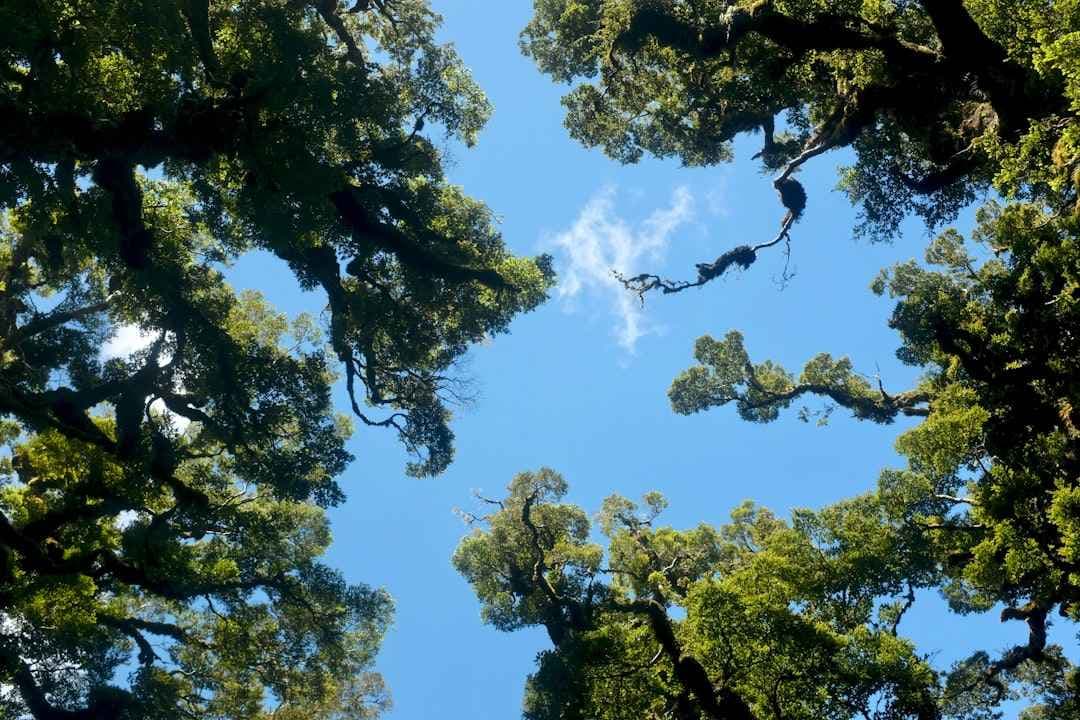
The structure follows natural forest layers: tall canopy trees, smaller fruit trees, shrubs, herbaceous plants, ground cover, and root crops. Each layer supports the others, which is exactly why maintenance drops over time rather than compounding.
What does a food forest actually do for employee wellbeing?
A food forest reduces stress, improves concentration, and gives employees a genuine reason to spend time outdoors, all of which translate directly into lower absenteeism and higher retention.
Research published by the Dutch RVO (Rijksdienst voor Ondernemend Nederland, 2022) on experiential forests in care settings found that green environments with an educational and productive dimension reduce stress, increase positive emotions and energy, and measurably improve cognitive recovery. The same mechanisms apply on a corporate campus.
The food forest layer adds something standard green spaces don't: agency. Employees aren't just looking at green, they're participating in it. Harvesting herbs for the canteen, joining a seasonal maintenance morning, or simply sitting under productive trees during an informal meeting creates a connection to the space that a manicured lawn never will.
For workplace managers trying to justify investment to HR leadership, that's a concrete differentiator. Lower stress, fewer sick days, stronger team cohesion, and a campus that people actually want to come to. These are measurable HR metrics, not soft claims.
How does a food forest support your sustainability and ESG commitments?
A food forest is one of the few outdoor investments that simultaneously hits biodiversity targets, carbon sequestration goals, and employee engagement KPIs, making it unusually strong for ESG reporting.
Most corporate green space investments deliver on one dimension. A food forest delivers across several. Native edible species support local pollinators and insects. The multi-layer canopy sequesters carbon and buffers heat on your campus. Productive harvests can feed into your canteen supply chain, shortening your food footprint. And the whole system is visible, photographable, and genuinely compelling for sustainability communications to investors and employees alike.
We've seen clients struggle to make their sustainability commitments feel real to staff. A food forest solves that problem directly. It's not a number in a report; it's something your team walks past every morning. If you're working toward SDG alignment or need to demonstrate tangible biodiversity action rather than just offset purchases, this is the kind of project that holds up to scrutiny.
For a broader look at how corporate green spaces contribute to on-site biodiversity, our article on how corporate forests boost biodiversity on company land covers the ecological mechanics in more depth.
Is the maintenance burden actually manageable for a facilities team?
Yes, and it gets lighter over time. A food forest is designed to become increasingly self-regulating as the layers mature, which is the opposite of a traditional planted bed that demands constant intervention.
This is the objection we hear most from facility managers, and it's a fair one. Adding a new green space category to your grounds management scope sounds like more work. The reality is that a well-designed food forest front-loads the effort in the establishment phase and then stabilises. Once the canopy closes and the understory fills in, the system manages water, nutrients, and competition largely on its own.
The economic picture supports this. Initial investment for a food forest runs roughly €20,000 per hectare, covering plant stock, design, and groundwork. After a decade of maturation, productive yields can generate around €12,000 per hectare annually, which outperforms conventional agricultural land use by approximately 20%. For a corporate campus, you're not running it as a commercial farm, but the low ongoing cost profile is genuinely different from maintaining ornamental planting.
If your concern is about adding a new vendor relationship on top of an existing grounds contractor, that's worth addressing directly in scoping. Our nature restoration and green space transformation service is designed to work alongside existing facilities arrangements, not replace them wholesale.
What if your outdoor space is too small or too constrained?
Small and constrained spaces are where the Miyawaki-inspired approach actually performs best. Dense, multi-layer planting in a compact footprint creates more biodiversity and visual impact per square metre than any conventional landscaping approach.
The assumption that you need a large site is the biggest misconception we encounter. A 200-square-metre corner of a car park border, a strip between buildings, or an underused lawn section can support a genuine food forest with canopy, fruit shrubs, and productive ground cover. The layering principle means you're stacking ecological value vertically, not just spreading it horizontally.
For campus environments where a full food forest footprint isn't available, a Miyawaki-style office garden achieves comparable density and speed of establishment in a much smaller area. We've written specifically about how Miyawaki-style office gardens turn dead space into dense green for exactly this scenario.
The key is matching the design to your actual space rather than scaling down a template. That's where the design phase matters most.
How do you build the internal business case for a food forest?
Anchor the case in three numbers your finance team and HR director already care about: absenteeism cost, retention cost, and ESG reporting value.
Absenteeism first. Stress-related absence is the most direct cost lever. If your team of 200 people averages even one extra sick day per year due to a poor working environment, the cost is substantial before you account for lost output. A green outdoor environment with demonstrated stress-reduction effects is a credible preventive investment.
Retention second. Campus attractiveness is a genuine factor in whether people choose to stay or leave, particularly in sectors competing for talent. A food forest is a differentiator that photographs well, communicates values clearly, and gives employees something to talk about.
ESG reporting third. If your organisation is working toward CSRD compliance or internal sustainability KPIs, a food forest generates real, measurable data: species counts, carbon sequestration estimates, productive yield, and biodiversity indices. These are numbers that belong in a sustainability report, not just a facilities update.
If you need help connecting a green space project to your existing sustainability framework, our sustainability consulting service supports exactly that kind of internal alignment work, from KPI definition to materiality analysis.
A food forest is the rare campus investment that pays into employee wellbeing, biodiversity, and ESG reporting simultaneously, without growing your maintenance burden over time. Knowing this means you can walk into a conversation with HR, finance, and your sustainability lead with a single project that answers all three of their questions at once. To get a concrete picture of what's possible on your specific site, reach out to us to discuss your campus and what a food forest design could look like.
Frequently asked questions
What are the main benefits of a food forest for office employees?
A food forest reduces stress, improves concentration, and gives employees a productive outdoor space to spend time in during the working day. Research from RVO (2022) on experiential green spaces confirms that access to nature with an educational and productive dimension lowers stress, improves mood, and supports cognitive recovery. For a corporate campus, this translates into lower absenteeism, stronger team cohesion, and a workplace that people actively want to return to.
How much space do you need for a corporate food forest?
You don't need a large site. A food forest can be established in as little as 200 square metres using dense, multi-layer planting based on the Miyawaki method. The vertical layering of canopy trees, fruit shrubs, herbaceous plants, and ground cover means you're stacking ecological and productive value rather than spreading it across a large footprint. Even a border strip, unused lawn section, or car park edge can be transformed into a functioning food forest.
Who maintains a corporate food forest after it's planted?
A food forest is designed to become increasingly self-regulating as it matures. The establishment phase requires more active management, but once the canopy and understory layers fill in, the system manages water, nutrients, and competition largely on its own. Forest Forward designs each project with long-term maintenance in mind and can work alongside your existing grounds contractor rather than replacing them.
Does a food forest count toward ESG or sustainability reporting?
Yes. A food forest generates measurable data across multiple ESG dimensions: biodiversity indices, carbon sequestration, productive yield, and habitat creation. These are quantifiable outputs that fit into CSRD-aligned reporting, SDG frameworks, and internal sustainability KPIs. It's one of the few physical investments that delivers simultaneously on environmental, social, and governance dimensions with visible, on-site proof.
What is the cost of installing a food forest on a corporate campus?
Initial investment runs approximately €20,000 per hectare, covering plant stock, ecological design, and groundwork. Ongoing maintenance costs decrease as the forest matures. After roughly ten years, a productive food forest can yield around €12,000 per hectare annually. For a corporate campus, the primary return is not commercial harvest but the wellbeing, ESG, and employer branding value, which are harder to put a single number on but consistently justify the investment.
How does a food forest differ from a standard office garden or green roof?
A food forest is a multi-layer, self-sustaining ecosystem that produces edible plants while actively supporting biodiversity. A standard office garden is typically ornamental and maintenance-heavy. A green roof addresses stormwater and insulation but rarely delivers the social and biodiversity benefits of a ground-level food forest. The food forest model combines productive yield, habitat creation, employee engagement, and low long-term maintenance in a way that neither a planted bed nor a green roof achieves on its own.
Sources
- RVO (Rijksdienst voor Ondernemend Nederland), 2022 — Research report on experiential forests and the measurable effects of green environments on stress, wellbeing, and cognitive function.
Share this post
Forest Forward Team
Stay up to date with our latest insights
Related articles
Real CSR activities for companies beyond team events
CSR activities are the concrete initiatives a company runs to create social, ecological or ethical impact beyond its core business, from volunteering and local community projects to nature restoration, sustainable sourcing and education. A fun day at a go-kart track is not one of them.
Sustainable business examples: 5 real cases from Belgian companies
Looking for proof that sustainability works beyond a slide deck? Here are 5 Belgian companies making it visible, measurable and real.
Sustainable business practices: a practical guide for 2026
Sustainable business means running your company with people, planet and profit weighed together, not profit alone. Here's how to actually do it.