
Corporate volunteering day: how one day leaves a lasting mark

Forest Forward Team
01-07-2026
•What is a corporate volunteering day, exactly?
A corporate volunteering day is a structured day on which a team dedicates its time and energy to a concrete local cause, working alongside a social, ecological or community partner. It is not a charity donation with a press release attached. It is your people, on location, doing something that matters, together.
We see this constantly in our work with HR and People & Culture managers at mid-sized Belgian companies: the biggest barrier to starting is not budget or intention, it is not knowing what the day actually looks like in practice. Once that picture becomes concrete, the decision to move forward becomes straightforward.
In Belgium, the legal framework matters here. Volunteering is by definition voluntary, unpaid and free from coercion, as defined under Belgian law (the Volunteer Act of 3 July 2005). For companies, that means the day must be genuinely optional for employees, clearly framed as social engagement rather than a work obligation, and organised through or with a recognised partner organisation. Get those three elements right and you are building something credible.
How does it differ from a classic team-building day?
A classic team-building day is designed around the team. A volunteering day is designed around a cause, and the team benefits as a result. That distinction sounds subtle but it changes everything about how people experience the day.
In a standard team-building format, the shared challenge is invented: an escape room, a cooking competition, a sailing trip. The stakes are artificial. In a volunteering day, the challenge is real. Meals need to reach people who are waiting for them. A nature reserve needs the invasive plants cleared before the season turns. A community garden needs building before the school term starts. When the work is real, the collaboration is real.
The result is a different kind of team memory. Not "remember when we won the quiz", but "remember when we actually built something together." That is the difference that makes a volunteering day stick.
What do teams actually do on a corporate volunteering day in Belgium?
The range is wider than most HR managers expect. Based on what we organise through our impact events for Belgian corporate teams, the most common formats fall into three categories.
Social and community projects:
- Preparing and distributing meals for vulnerable people in urban neighbourhoods
- Assembling gift packages for families in need
- Cleaning and revitalising public spaces, parks and streets
Nature and ecological projects:
- Maintaining and restoring local nature reserves or forest areas
- Clearing invasive species and planting native vegetation
- Trail maintenance and biodiversity monitoring
Care and education support:
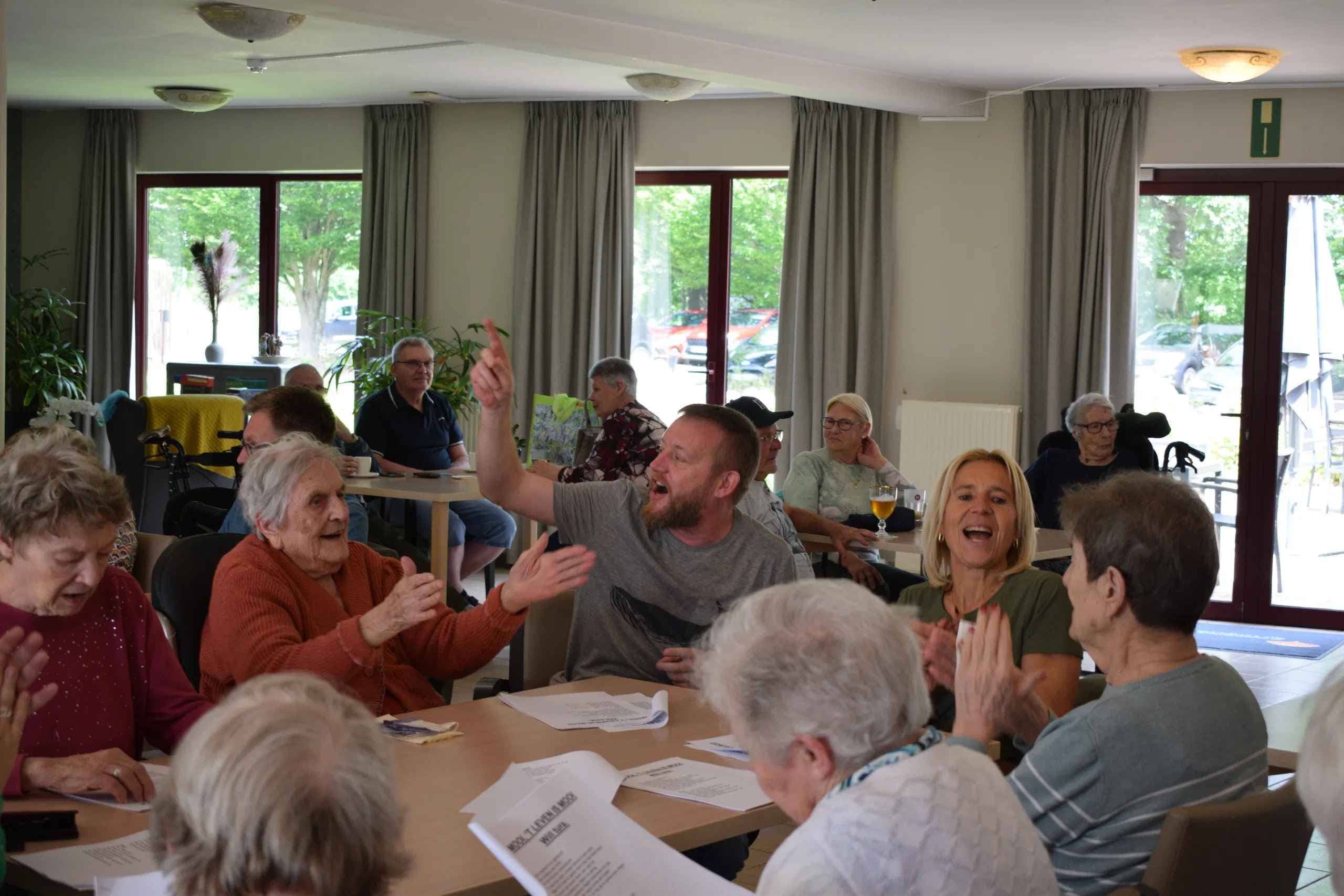
- Supporting activities at care facilities or day centres
- Organising events or workshops at community organisations
Each of these formats produces something visible by the end of the day. That visibility is not incidental; it is what makes the day reportable internally and externally, and what gives participants the feeling that their time genuinely counted.
Belgium's volunteering sector is substantial: according to research published by the Belgian Platform for Volunteer Work (bpact.be), volunteering in Belgium is estimated to represent the equivalent of 290,000 full-time positions, with 37% of that activity happening within or for an association or organisation. When a company organises a volunteering day, it is joining an existing, deeply rooted social infrastructure, not inventing something from scratch.
What are the concrete results for team, employer branding and ESG reporting?
For the team, the results are measurable in engagement and cohesion. Colleagues who work side by side on something meaningful, outside their usual roles and hierarchies, develop a different kind of trust. The sustainability or CSR manager gets a local project that maps to real environmental or social impact. The HR manager gets a team experience that people actually talk about afterwards.
For employer branding, a well-documented volunteering day generates authentic storytelling material. Photos and stories from a real project, with a real partner, in a real local context, carry more weight than any campaign built around abstract values. Prospective employees notice the difference between a company that says it cares and one that shows its team in the field.
For ESG reporting, a structured volunteering day with a recognised partner produces data you can use. Hours contributed, number of participants, type of project, partner organisation, measurable output. These are not soft metrics; they are the kind of concrete local action that makes an ESG narrative credible in 2026, when stakeholders and regulators increasingly expect specifics rather than intentions.
Our sustainable team experiences are built precisely to deliver on all three of these dimensions at once, because we know from our work across sectors in Belgium that HR, sustainability and communications rarely have the luxury of separate budgets and separate moments.
When does a volunteering day work, and when does it fall flat?
A volunteering day works when three conditions are met: the partner organisation has a genuine need, the team's contribution makes a real difference to that need, and the company follows through with communication and, where possible, ongoing commitment.
It falls flat when it is treated as a photo opportunity. A single morning of symbolic activity at a cause that did not really need the help, with no follow-up and no story told internally, leaves people feeling like they participated in a marketing exercise. That cynicism is harder to undo than the original inaction.
The distinction comes down to partner quality and programme design. Working with a partner who actually depends on the contribution, who briefs the team properly, and who can report back on what the day achieved, is what transforms a gesture into a genuine act of engagement.
We handle that partner relationship as part of how we design and run every corporate volunteering event, because the partner's experience of the day matters as much as the team's. Fair compensation for the organisations involved is non-negotiable in our approach.
How do you plan a corporate volunteering day in practice?
The practical planning is simpler than most companies expect when they work with the right partner. The key decisions are:
- Team size and composition: a volunteering day scales from a single department to a company-wide event. The format adjusts accordingly.
- Type of project: social, ecological or community, aligned with your company's values and ESG priorities.
- Location: local to your offices, or at a specific site that connects to your sustainability story.
- Communication plan: how you brief employees beforehand, how you capture the day, and how you share the story internally and externally.
- Follow-up: whether this is a one-off or the start of a longer partnership with the organisation.
If you want to add a sustainability talk or interactive session to the day, our workshops and walks programme can be built in, turning the day into both action and education.
One well-organised volunteering day does more for team cohesion, employer branding and ESG credibility than a year of policy documents, because it gives your people a shared experience they can point to and say: we did that. The single day is the action — you do not need to wait for a perfect long-term programme before taking it. Request your tailored corporate volunteering day with Give it Forward and we will design the full programme around your team, your values and a local partner that genuinely needs you.
Frequently asked questions
What exactly is a corporate volunteering day?
A corporate volunteering day is an organised day on which a company's employees work together on a concrete local cause, such as supporting a social organisation, maintaining a nature reserve, or helping a community project. It is structured, voluntary and run in partnership with a recognised organisation. Unlike a standard team-building activity, the work produces a real, visible result for a cause that genuinely benefits from the team's contribution.
How is a volunteering day different from regular team building?
The core difference is that the challenge is real, not invented. In a volunteering day, the team works on something that actually matters to a local partner or community, which changes how people engage and what they remember. The shared experience is grounded in genuine impact rather than a designed game or competition, which typically produces stronger and more lasting team cohesion.
What types of projects can a Belgian company choose from?
Belgian companies can choose from social and community projects (meal distribution, package assembly, neighbourhood clean-ups), ecological and nature projects (forest maintenance, invasive species removal, biodiversity work), and care or education support activities. The right format depends on the company's values, ESG priorities and the size of the team. A good organising partner will match you to a project where the team's contribution fills a real need.
What does a volunteering day deliver for ESG reporting?
A structured volunteering day with a recognised partner produces concrete, reportable data: number of participants, hours contributed, type of project, partner organisation and measurable output. These are the specifics that make an ESG narrative credible to stakeholders and, increasingly, to regulators. A one-off gesture without documentation adds little to a sustainability report; a properly organised day with a named partner and tracked outcomes does.
Does Belgian law allow companies to organise volunteering days for employees?
Yes, with clear conditions. Belgian volunteering law (the Volunteer Act of 3 July 2005) defines volunteering as voluntary, unpaid and free from coercion. For companies, this means the day must be genuinely optional for employees, not framed as a work obligation, and organised through or with a recognised partner organisation. Working with an experienced event partner ensures the programme meets these requirements from the start.
How many people can participate in a corporate volunteering day?
A corporate volunteering day can be scaled to fit a single department or a company-wide event. The format, activities and partner organisation are adjusted to match the group size. Smaller teams typically work on more hands-on, focused projects, while larger groups can split across multiple activities or sites. There is no fixed minimum or maximum; the programme is designed around your team's composition and the partner's capacity.
Sources
- Belgian Platform for Volunteer Work (bpact.be), 2023 — Volunteering in Belgium estimated at the equivalent of 290,000 full-time positions; 37% within or for an association or organisation.
- Vlaanderen.be, Werken als vrijwilliger — Official Flemish government guidance on the legal framework for volunteering in Belgium, including the conditions of voluntary, unpaid and uncoerced activity.
Share this post
Forest Forward Team
Stay up to date with our latest insights
Related articles

Corporate social responsibility programs that actually work
A CSR program only pays off when it's structural, measurable and tied to daily operations, not a one-off gesture that ends the moment the photos are posted.

Volunteer team building: can your company outing be a volunteer action?
Yes. Not as a side activity bolted onto a normal team day, but as the team day itself, with the volunteer work as the main event.

Team building tree planting days: how to make it a real team event, not just a donation
You can run a company tree planting day that is both a genuine team building experience and a real environmental project, but only if you design the day around your people, not just around the trees.