
Team building tree planting days: how to make it a real team event, not just a donation

Forest Forward Team
04-08-2026
•Most organizations offering corporate tree planting are nonprofits set up to plant trees efficiently, with a company showing up, digging for an hour, and leaving. That works fine if your only goal is offsetting carbon or writing a CSR press release. It does very little for team cohesion, employee pride, or the kind of story your marketing team actually wants to tell.
We see this constantly in our work with HR and CSR teams across Belgium: the companies that get real value from a tree planting day are the ones that treat it as an event with a program, not a volunteering slot squeezed into a Friday afternoon. That means thinking about group dynamics, storytelling, safety, and follow-up just as seriously as you think about the planting itself.
Why a standard tree planting slot isn't a team building event
A tree planting session organized purely by a nonprofit is built for volunteer throughput, not for team experience. It usually means a briefing, a few hours of digging, and a goodbye, with no structure designed around how your colleagues actually work together or what they take home from the day.
Compare that to well-known Belgian corporate examples. Luminus ran a tree planting action in Halle with 3,300 trees, working with the Jane Goodall Institute Belgium and the Agentschap Natuur & Bos. KPMG in Belgium partnered with BOS+ to plant 4,000 trees as part of a broader engagement push. These numbers are impressive as environmental output. What they don't tell you is whether the day itself built anything among the people who showed up with a spade.
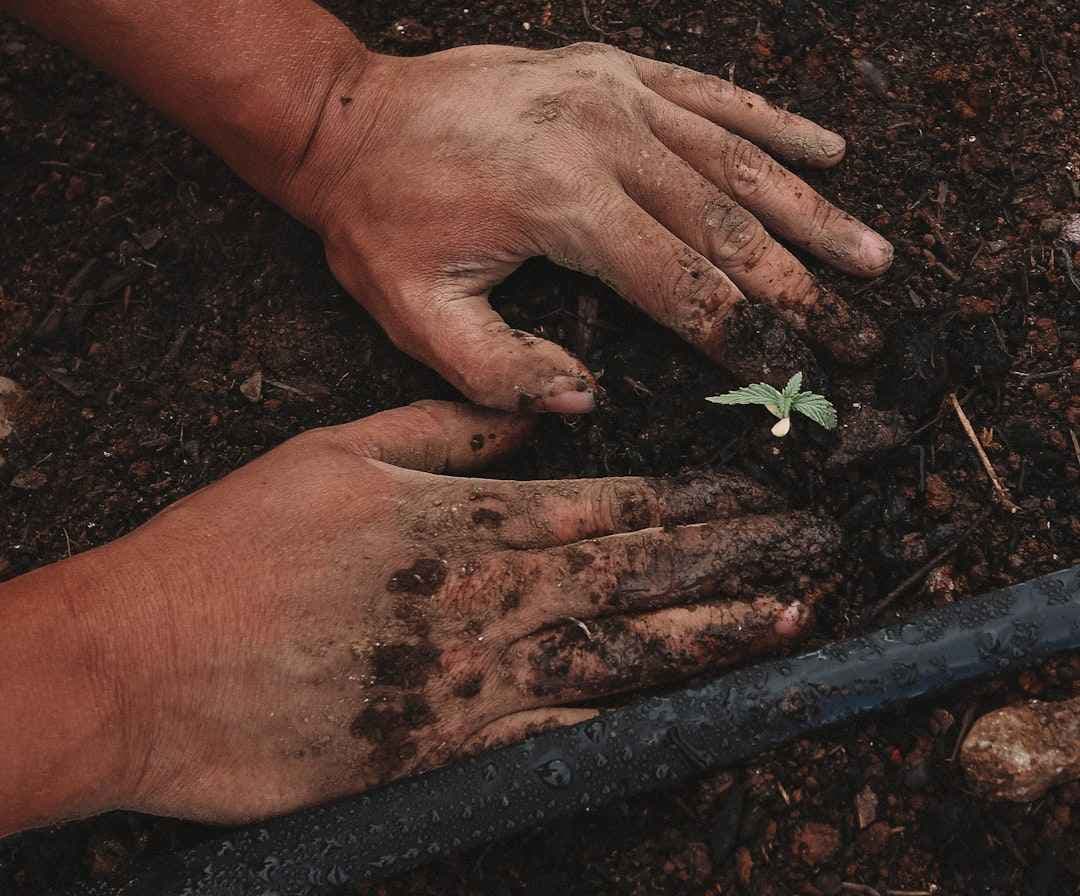
That's the gap we design for. A tree planting day is only as valuable as the experience wrapped around it. Planting a tree with your team is a strong shared physical activity, hands in the soil, visible progress, a result you can literally see grow, but it only becomes team building when there's structure: mixed groups working toward a shared target, a social component like a shared meal, and a story your team can retell afterward.
Step 1: Define what "team building" needs to mean for this group
Before you contact anyone about locations or saplings, decide what outcome you actually want from the day, because that decision shapes everything else. A team that's been through a rough reorganization needs a different structure than a sales team celebrating a strong year, or a mixed group meeting colleagues from other departments for the first time.
What this looks like in practice:
- Write down the top one or two goals: cohesion across departments, celebrating a milestone, onboarding new hires, or strengthening a specific team after a difficult period.
- Decide on group size and whether you want departments mixed or kept together.
- Flag any constraints early: accessibility needs, weather sensitivity, whether families or clients will join.
What it looks like when it's working: you can describe the day in one sentence to your leadership team beyond "we planted trees", something like "we mixed our five regional teams into one group for the first time this year."
Step 2: Choose a project with real ecological substance, not a symbolic patch
The tree planting location and species mix need scientific and ecological grounding, not just a nice backdrop for photos. A credible project has a clear purpose: restoring degraded forest, supporting biodiversity corridors, or replacing monoculture with mixed native species, and that purpose should be explainable to your team on the day itself.
This matters more than most companies realize going in. Under the EU's sustainability reporting framework, biodiversity and ecosystems fall under a dedicated disclosure standard, ESRS E4. If your tree planting day is meant to feed into ESG or CSRD reporting later, the project needs to be documented with enough rigor to survive that scrutiny, not just a feel-good afternoon with a vague location pin.
In our work running impact events across sectors, we've found the projects that hold up best combine a clear ecological rationale (why this land, why these species, who manages it long-term) with a location close enough to be logistically simple and emotionally local for your team. A forest an hour from your office that your employees can visit again with their families lands very differently than a project three hours away that nobody will ever see twice.
Step 3: Build the day around people, not just planting
The planting itself should take up less of the day than most companies assume, and the surrounding structure is where the team building actually happens. A well-run day includes a briefing that connects the project to your company's values, mixed-team planting in small groups, and a shared social moment, a food truck, a BBQ, or a simple lunch together outdoors.
A day that works usually follows this shape:
- Arrival and briefing: explain the site, the species, and why this specific project matters.
- Mixed-group planting: assign people across departments or teams they don't normally work with.
- A visible shared target: "our group plants 500 trees today" gives people something to work toward together.
- A social close: food and informal time, where most of the actual bonding happens.
- A wrap-up moment: numbers achieved, photos, and a short reflection on what the group accomplished.
We organize Impact Events specifically around this structure, connecting corporate teams with social and environmental organizations across Belgium for hands-on days guided by professionals, with the volunteer work paired with a social component like a food truck or BBQ. That combination, guided expert supervision plus a genuine social moment, is what separates a team building day from a volunteer shift.
If your group also includes families, a nature-based Family Day built around guided walks and outdoor activities extends the same idea to a broader audience beyond just employees.
Step 4: Capture the numbers you'll actually use afterward
The measurable output of your tree planting day is what turns it from a nice memory into something you can report internally and externally. Track trees planted, species mix, hectares or area covered, volunteer hours contributed, and who took part, before the day even starts, not as an afterthought once everyone's gone home.
This is where most companies leave value on the table. A tree planting day without documented output is just an anecdote. The same day with a short impact summary, numbers, photos, and a note on follow-up monitoring, becomes something your CSR manager can put directly into ESG reporting and your comms team can put directly into an internal newsletter or LinkedIn post. Our guide on measuring the impact of team events walks through exactly which metrics hold up under scrutiny later.
When this doesn't work
Three things reliably sink a tree planting team building day. First, treating it as a pure donation with no on-site involvement, writing a cheque for a nonprofit to plant on your behalf removes the team experience entirely, even if the trees still go in the ground. Second, picking a location purely for optics rather than ecological need, which undermines credibility the moment someone in sustainability starts asking questions. Third, skipping the social structure altogether, dropping fifty people at a field with shovels and no facilitation almost never produces the cohesion companies expect.
Frequently asked questions
Can a tree planting day really work as team building, not just a CSR activity?
Yes, but only when the day is deliberately structured around group dynamics, not just planting logistics. Mixed teams, a shared target, guided facilitation, and a social component like a shared meal are what create the bonding effect. A tree planting slot run purely by an environmental nonprofit, with no structure beyond digging, rarely delivers that outcome on its own.
How many trees should a company plant for a meaningful event?
There's no fixed threshold, what matters is that the number is visible and achievable as a shared team target within the time you have. Companies like Luminus and KPMG have run actions in the thousands, but a smaller team of 30-50 people can build the same sense of shared accomplishment planting a few hundred trees in a single afternoon.
Does a corporate tree planting day count toward ESG or CSRD reporting?
Yes, if it's documented properly. Biodiversity and ecosystem impact fall under ESRS E4 in the EU sustainability reporting standards, which means the project needs clear data: location, species, area, and ongoing monitoring, not just a photo from the day. Build that documentation into the event from the start rather than trying to reconstruct it afterward.
What's the difference between a corporate tree planting event and a nonprofit volunteer day?
A nonprofit volunteer slot is optimized for planting efficiency, get as many trees in the ground as possible with minimal overhead. A corporate team building event built around tree planting adds facilitation, mixed-group structure, a social moment, and impact reporting designed for your company's internal and external communication, not just the environmental outcome.
Can we combine tree planting with other sustainability activities in one day?
Yes, and it often strengthens the day. Pairing a planting session with a short sustainability talk or guided nature walk helps employees understand the ecological reasoning behind the project, turning them into genuine ambassadors rather than one-day volunteers. Our sustainable Walks & Talks format is built for exactly this kind of pairing.
A tree planting day only delivers real team building value when it's designed as an event with structure, not booked as a volunteer slot with a shovel handed to each employee. Once you see that distinction, you'll evaluate every "corporate tree planting" offer by whether it has a program behind the planting, not just a location and a headcount. If you want a day built around your team's dynamics, your ESG goals, and a project with real ecological substance, get in touch about an Impact Event and we'll design it around your people first.
Sources
- Luminus, 2024 — Tree planting action of 3,300 trees in Halle with Jane Goodall Institute Belgium and Agentschap Natuur & Bos
- KPMG in Belgium, 2024 — KPMG plants 4,000 trees with BOS+
- Samen voor Biodiversiteit, 2024 — Overview of CSRD/ESRS E4 biodiversity and ecosystem reporting requirements
Share this post
Forest Forward Team
Stay up to date with our latest insights
Related articles

Corporate social responsibility programs that actually work
A CSR program only pays off when it's structural, measurable and tied to daily operations, not a one-off gesture that ends the moment the photos are posted.

Volunteer team building: can your company outing be a volunteer action?
Yes. Not as a side activity bolted onto a normal team day, but as the team day itself, with the volunteer work as the main event.
Nature-based team building: why it actually works
Nature-based team building works because it replaces artificial games with real stakes: a physical outcome, a changed landscape, a team that did something rather than played at something.