
Nature-based team building: why it actually works

Forest Forward Team
04-08-2026
•If you've ever sat through a debrief after an escape room or a bowling night, you know the problem. Everyone had a decent time. Nobody remembers it three weeks later. And it did absolutely nothing for how your organization shows up on ESG reporting, in recruitment conversations, or in the story you tell clients about who you are. That's the gap nature-based, impact-driven team building closes, and it's why we built Give it Forward around it instead of around another indoor icebreaker format.
What makes nature-based team building different from a standard outing?
Nature-based team building puts your team inside a real environment doing real, physical work with a visible result, not inside a constructed game with an artificial win condition. The difference isn't scenery. It's stakes.
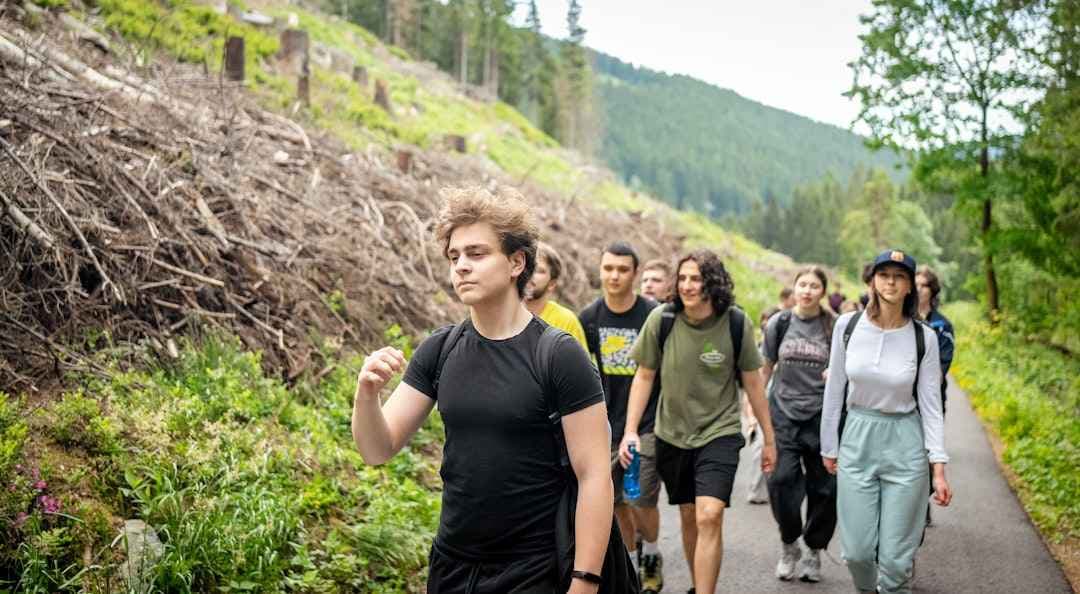
We see this constantly in our work with HR and sustainability teams across Belgium: the moment a team stops "playing" a scenario and starts actually restoring a piece of forest, clearing a wetland, or planting trees that will still be standing in ten years, the energy in the group shifts. People stop performing enthusiasm for a facilitator and start collaborating because the task genuinely needs collaboration. Nobody debates strategy for pulling invasive species out of a riverbank the way they debate a trivia round. They just get to work, and that work requires the same things good teamwork always requires: coordination, communication, patience with each other's pace.
This is also why the format resists the fatigue that hits standard team building. A pub quiz or an escape room is fun exactly once, because the mechanic is the whole point and mechanics get old fast. A forest restoration project, a coastal cleanup, or a biodiversity walk doesn't wear out the same way, because the content changes with the season, the site, and the cause. Teams come back to nature-based formats year after year without it feeling repetitive.
Why does getting outside actually change how a team behaves?
Being outdoors, away from the office hierarchy and the meeting-room dynamic, resets how colleagues interact with each other. Physical distance from desks and screens tends to flatten status differences that show up automatically indoors.
Someone who's quiet in strategy meetings often turns out to be the person who knows how to read a compass, spot a bird, or organize a work crew efficiently. That's not a soft, feel-good observation, it's a practical reshuffling of who leads and who follows, and it's one of the most consistently reported effects of getting teams outside their usual environment. Fresh air and a genuinely shared physical task tend to produce more honest conversation than a facilitated "trust exercise" ever does, because nobody's performing for a camera or a manager.
We build our Sustainable Walks & Talks format around exactly this shift, pairing guided nature experiences with interactive sustainability sessions led by naturalists, comedians, and ESG specialists, so the conversation about your company's climate and social goals happens while people are actually moving through a forest or along a coastline, not sitting in a conference room clicking through slides. You can see how we structure these sustainability talks and walks if you want to see what that looks like in practice. It turns a mandatory ESG briefing into something people actually want to attend.
Why does impact matter more than the activity itself?
The activity is forgettable if it doesn't leave something behind. What makes nature-based team building stick, in memory and in your reporting, is a physical, lasting result your team can point to afterward.
This is the piece most team building providers skip, and it's the piece we refuse to skip. A day spent doing outdoor games is a nice afternoon. A day spent restoring a specific hectare of forest, or supporting a social organization's land, produces something traceable: a place your team can revisit, photograph, and cite in your sustainability report. In our engagements with sustainability and CSR managers, the recurring ask is the same: give us something measurable, not something symbolic. A tree count, a hectare figure, a named local partner organization, these are the details that turn a fun day into a credible line item in an ESG update.
Belgium's own Hoge Kempen National Park frames its corporate programs around exactly this logic: teams don't just visit the park, they contribute directly to local nature management, and program revenue feeds back into future restoration and habitat work in the region. That's the model worth citing, because it proves the format at national scale, and because it demonstrates that "impact" doesn't have to be abstract. It can be a specific park, a specific project, a specific improvement you can name to your board.
Our own Impact Events are built on the same principle: teams work hands-on with partner organizations across care, food distribution, nature conservation, and social farms, guided throughout by our own team, so the social and environmental outcome is never an afterthought bolted onto a fun day. You can see the full range of how we design impact events with real social outcomes if this is the direction your team is leaning.
How does this fit a company's ESG and employer branding goals at the same time?
Nature-based, impact-driven team building is the rare format that serves three audiences at once: your team internally, your ESG reporting, and your external brand story, without any of the three competing for budget or attention.
That's a genuinely unusual property. Most corporate initiatives force a trade-off, a training budget serves the team, a CSR donation serves the sustainability report, a brand campaign serves marketing, and rarely do the three overlap. A well-run nature-based team day collapses that trade-off. Your HR lead gets a team that actually bonded over shared physical effort. Your CSR manager gets a measurable, local, photographable outcome they can cite in the next sustainability update. Your marketing lead gets genuine storytelling material, real people, real place, real result, not a stock photo of hands stacked in a circle.
We've run this exact combination for clients who came in asking for one of the three and left using it for all three. The pattern is consistent: once a company runs one nature-based event and sees the internal reaction alongside the external material it generates, the conversation shifts from "should we do this once" to "how do we make this a recurring part of how we operate." That's when a single event turns into a multi-year partnership, whether that's an annual forest day, a recurring volunteer partnership, or a family day that extends the experience to employees' households. If you're weighing whether to open the experience up beyond just your staff, our approach to organizing sustainable family days in nature is worth a look, since it's designed around the same principle of connection plus visible environmental contribution.
How do you pick the right format for your team's size and goals?
The right format depends on your team's size, your ESG priorities, and how visible you want the result to be, not on which activity looks best on a brochure. Small teams often do better with a focused, hands-on project; larger groups need a format that scales without turning into a logistics exercise.
If you're weighing formats for a smaller group, our piece on team building for small groups and which outdoor activities actually work walks through what tends to work at that scale. For teams weighing several outdoor formats side by side, we've also broken down practical outdoor team building formats with real impact, and a closer look at what actually builds cohesion in outdoor workshops versus what just looks good on paper.
The strongest claim in this article is simple: a team day only becomes memorable and reportable when it leaves something behind that outlives the day itself. Once you internalize that, you stop evaluating team building providers on activity variety and start evaluating them on what's left standing afterward, a restored hectare, a stronger local partnership, a team that genuinely worked together rather than performed working together. The next step is concrete: get in touch with our team to scope a nature-based event tailored to your team's size, sector, and sustainability goals.
Frequently asked questions
What are good nature-based team building activities for a company?
Strong options include guided forest restoration, biodiversity walks paired with sustainability talks, coastal or wetland cleanups, and hands-on volunteer days with local nature or social organizations. The common thread is a real, physical task with a visible outcome, not a constructed game. Programs that combine movement outdoors with a facilitated conversation about your company's ESG goals tend to generate the strongest engagement and the clearest reporting material afterward.
Is nature-based team building suitable for large groups?
Yes, but the format needs to scale properly rather than just adding more people to the same activity. Larger groups usually need multiple concurrent work streams, a wider site, and more facilitation support to keep everyone genuinely engaged rather than standing around. A partner who handles the logistics end to end, from site selection to on-the-day coordination, is what makes large-group nature events work smoothly.
Does nature-based team building actually help with ESG reporting?
Yes, when the event produces a measurable, named outcome, such as a specific area restored, a number of trees planted, or a documented partnership with a local organization. That specificity is what turns a team day from a nice internal memory into a citable line in a sustainability report. Vague "we did a nature activity" claims don't hold up under scrutiny the way a traceable, local project does.
How is this different from a normal outdoor team building day?
A normal outdoor day, hiking, kayaking, an obstacle course, is recreational and doesn't leave anything behind once the day ends. Nature-based, impact-driven team building adds a real task with a lasting result, forest restoration, habitat work, or hands-on support for a social organization, so the team's effort translates into something that still exists next month and next year.
Can nature-based team building work for diverse teams and accessibility needs?
Yes, when the program is tailored rather than one-size-fits-all. Walking pace, task difficulty, and physical demands can all be adjusted so people with different fitness levels or mobility needs participate fully rather than watching from the side. A good provider scopes this during planning, not on the day itself, so nobody is left out of the actual work.
Sources
- Nationaal Park Hoge Kempen, corporate team building programs — describes how company team building at the park directly supports local nature management and restoration funding.
Share this post
Forest Forward Team
Stay up to date with our latest insights
Related articles

Corporate social responsibility programs that actually work
A CSR program only pays off when it's structural, measurable and tied to daily operations, not a one-off gesture that ends the moment the photos are posted.

Volunteer team building: can your company outing be a volunteer action?
Yes. Not as a side activity bolted onto a normal team day, but as the team day itself, with the volunteer work as the main event.
Team building tree planting days: how to make it a real team event, not just a donation
You can run a company tree planting day that is both a genuine team building experience and a real environmental project, but only if you design the day around your people, not just around the trees.