
Employee volunteer programs: what sets leaders apart

Forest Forward Team
01-07-2026
•What actually defines an employee volunteer program?
An employee volunteer program (EVP) is a structured, company-supported initiative that gives employees paid or protected time to contribute to social or environmental causes. The best ones go further than that definition suggests. They align with the company's ESG strategy, connect employees to causes that match their values, and produce outcomes that HR, sustainability, and communications leaders can all point to with confidence.
We see this constantly in our work with Belgian mid-to-large companies: the organizations that get the most out of corporate volunteering are not the ones with the biggest budgets. They are the ones that treat volunteering as a strategic lever, not a goodwill gesture. The difference shows up in retention figures, in ESG reporting, and in how employees talk about their employer at the dinner table.
Why do companies invest in volunteer programs?
Companies invest in employee volunteering because it solves three problems at once, and no other single initiative does that as efficiently.
Team cohesion. Working side by side on something that genuinely matters strips away hierarchy and builds trust faster than any structured team-building exercise. When employees see their manager digging in with their sleeves rolled up, the effect on team culture is immediate. The most effective programs make clear that management leads from the front, not from a sponsorship cheque.
Employer brand. In a competitive talent market, purpose-driven culture is a real differentiator. Companies with active volunteer programs are consistently perceived as more attractive employers, particularly by younger professionals entering the workforce. Structured volunteering is one of the clearest signals a company can send about what it actually values, beyond what the careers page says.
ESG credentials. For sustainability and CSR managers working toward concrete targets, volunteer programs generate measurable, reportable outcomes. Hours contributed, organizations supported, kilograms of food distributed, square meters of nature maintained. These numbers belong in your sustainability report, and they hold up under scrutiny in ways that a donation figure does not.
What separates sustained programs from one-off campaigns?
This is the question that matters most for HR and sustainability leaders evaluating whether to launch or upgrade an initiative. The research is clear, and it matches what we observe across the companies we work with in Belgium.
Employee choice drives participation. Roughly 85% of employees say they would participate, or seriously consider participating, if they have genuine input into which project or cause they support. Programs that assign employees to a single activity on a single day see lower engagement and faster drop-off. Programs that offer a range of meaningful options, aligned with the company's values but varied enough to connect with different employees, sustain momentum year after year.
Turnover drops when volunteering is structural. Companies that embed volunteering into their culture, rather than scheduling it as an annual event, see significantly lower staff turnover. The mechanism is straightforward: employees who feel their work contributes to something beyond revenue are more likely to stay, perform, and advocate for their employer. A 57% reduction in turnover is the figure that appears in the research, and it is consistent with what HR managers we work with report after running structured programs for 12 months or more.
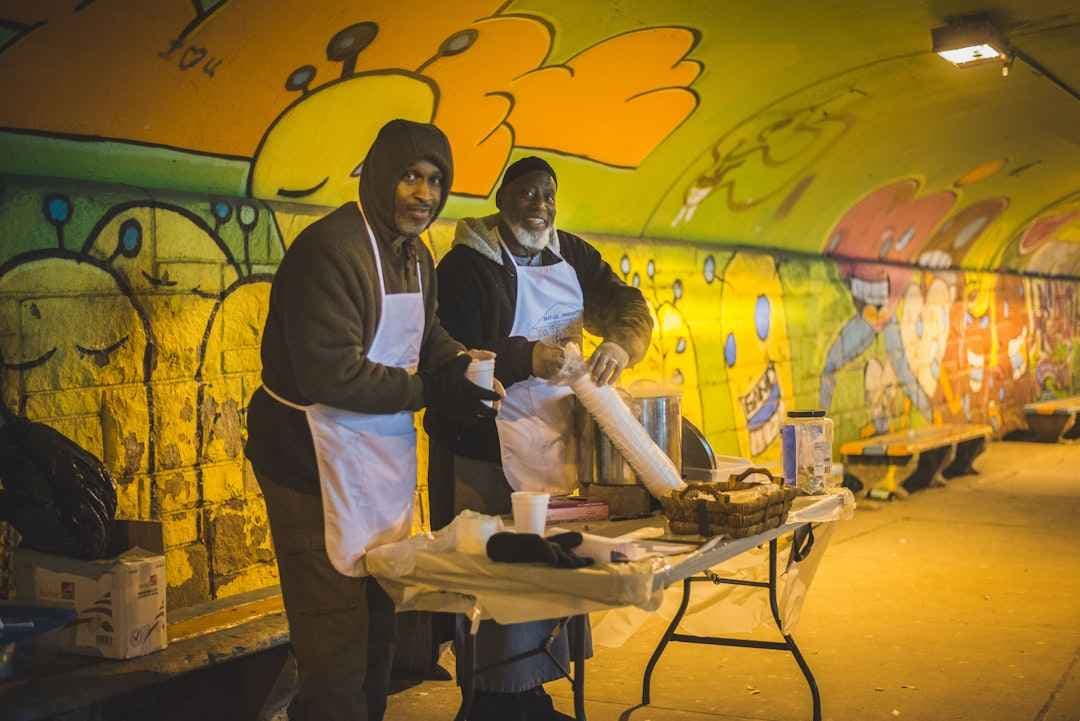
Local, visible impact keeps teams engaged. Abstract CSR commitments do not move people. Spending an afternoon restoring a local nature reserve, supporting a food bank in the city where your team works, or contributing skilled time to a community organization does. The impact is tangible, the stories are real, and the photographs actually look like your team. This is why the most successful programs prioritize hands-on, local projects over remote or purely financial contributions.
Ownership and measurement make programs stick. Programs that survive beyond the first year have one thing in common: a named internal owner who is accountable for the program, a strategy that fits the company's DNA, and a reporting structure that makes outcomes visible. Volunteering without measurement is a cost. Volunteering with SMART goals and transparent reporting is an investment you can defend to the board.
If you want to understand what this looks like in practice, our article on running impactful corporate volunteer events walks through the operational side in detail.
How does volunteering show leadership, inside and outside the company?
Leadership shows up in two directions: internal and external.
Internally, the signal is behavioral. When senior leaders participate alongside their teams, not as observers but as active contributors, it communicates that the company's values are real. Employees notice when the CEO is not afraid of getting their hands dirty. That visibility creates connection across levels of the organization that a town hall or a leadership communication never will.
Externally, a well-run volunteer program is one of the most credible ways to demonstrate that a company's sustainability commitments are genuine. Clients, suppliers, and the broader community see the difference between a company that writes a cheque and one that shows up. In a landscape where greenwashing scrutiny is increasing, authentic, documented community engagement is a reputational asset.
For companies navigating CSRD reporting obligations, volunteer program outcomes also feed directly into social impact metrics. Hours, beneficiaries, partner organizations, and local environmental outcomes are exactly the kind of granular data that sustainability reports need to hold up under third-party review.
What do successful corporate volunteer programs look like in practice?
The strongest programs share a recognizable shape, regardless of sector or company size.
- They run multiple times a year, not once, giving employees repeated opportunities to engage.
- They partner with established local organizations that have real, ongoing needs, not one-off requests.
- They combine hands-on work with team bonding, so the experience is meaningful and enjoyable.
- They capture outcomes in a format that feeds into ESG reporting and internal communications.
- They involve employees in choosing the causes, which drives participation and ownership.
Our impact events are built around exactly this model. Teams work hands-on alongside social organizations across Belgium, on projects ranging from nature restoration and food distribution to care facilities and community centers. We handle the full organization and maintain sustained partnerships with every organization we work with, so the impact does not disappear when the team goes home. Because we customize every program to a company's values and ESG goals, the experience connects directly to what the company is already trying to achieve.
For companies that want to go deeper on the sustainability narrative with their teams before or after an event, our sustainability walks and talks turn employees into genuine ambassadors for the company's ESG story.
You can also explore the full range of what we do on our sustainable team experiences overview, which covers everything from family days to impact events and workshops.
For more on how to frame the business case for sustainable team engagement, our piece on what sustainable teambuilding actually means is worth reading alongside this one.
The companies that lead on employee volunteering are not the ones with the largest CSR budgets; they are the ones that treat volunteering as a strategic program with clear ownership, local roots, and measurable outcomes. Now that you know what separates a sustained program from a symbolic gesture, you can evaluate your own initiative against those same criteria. To move from evaluation to action, reach out to us to design an impact event that fits your team, your values, and your ESG goals.
Frequently asked questions
What is an employee volunteer program?
An employee volunteer program is a structured initiative through which a company gives employees dedicated time, typically during working hours, to contribute to social or environmental causes. The best programs go beyond a single annual event: they offer employees a choice of projects aligned with the company's values, maintain ongoing partnerships with community organizations, and track outcomes that feed into ESG reporting and employer brand communications.
Do companies actually benefit from employees volunteering?
The benefits are measurable across three areas. Companies with structured volunteer programs see significantly lower staff turnover, with some research pointing to reductions of around 57%. Employee engagement scores improve, with the large majority of participants reporting a positive effect on motivation and job satisfaction. And employer brand strength increases, particularly in attracting younger professionals who actively look for purpose-driven workplace culture when evaluating job offers.
What kinds of activities work best for corporate volunteer programs?
Hands-on, local activities consistently outperform abstract or remote contributions. Practical projects, such as nature restoration, food distribution, care facility support, and community maintenance work, generate stronger team cohesion and more compelling storytelling than financial donations alone. The most effective activities combine meaningful work with team bonding elements, so participants leave with both a sense of contribution and stronger relationships with their colleagues.
How do volunteer programs support ESG goals?
Volunteer programs generate concrete, reportable social impact data: hours contributed, organizations supported, beneficiaries reached, and environmental outcomes achieved. This granular data is exactly what sustainability reports need to meet growing disclosure requirements, including those emerging from CSRD obligations. A well-documented volunteer program also demonstrates that a company's social commitments are behavioral, not just declarative, which holds up better under third-party scrutiny.
What separates a one-off volunteer day from a sustained program?
Three factors determine whether a program lasts. First, employee choice: programs that let employees select projects aligned with their own values see higher participation and repeat engagement. Second, internal ownership: programs with a named accountable person and a clear strategy survive leadership changes and budget cycles. Third, measurement: programs that track outcomes and report them transparently become embedded in the company's identity, rather than treated as an optional extra that gets cut when priorities shift.
How does volunteering strengthen employer branding?
Volunteering strengthens employer branding by making a company's values visible and credible. Candidates and employees judge culture by behavior, not by values statements. A company that regularly shows up in the community, that invests employee time rather than just money, and that generates authentic stories and images from real team experiences sends a signal that is hard to fake and easy to communicate. This is particularly effective in attracting talent that prioritizes purpose alongside compensation.
Share this post
Forest Forward Team
Stay up to date with our latest insights
Related articles

Corporate social responsibility programs that actually work
A CSR program only pays off when it's structural, measurable and tied to daily operations, not a one-off gesture that ends the moment the photos are posted.

Volunteer team building: can your company outing be a volunteer action?
Yes. Not as a side activity bolted onto a normal team day, but as the team day itself, with the volunteer work as the main event.

Team building tree planting days: how to make it a real team event, not just a donation
You can run a company tree planting day that is both a genuine team building experience and a real environmental project, but only if you design the day around your people, not just around the trees.