
How to organize a company family day that creates lasting impact

Forest Forward Team
22-07-2026
•Skip straight to the answer: pick one accessible location, build family-friendly logistics around it, add local and sustainable catering, and center the day on an activity that leaves something behind, whether that's a restored patch of nature, a supported local project, or a concrete number you can report on afterward. Everything else is detail. If you get those four things right, the rest of the day organizes itself.
Why most family days don't create lasting impact
Most company family days fail to leave a mark because they're built around logistics, not meaning. A rented venue, a bouncy castle, a barbecue, a goodbye. Fun in the moment, forgotten by the following week, and impossible to mention in an ESG report.
We see this constantly in our work with HR, sustainability, and marketing teams planning family days together: each department wants something different from the same day, and if nobody designs for all three at once, the event ends up generically pleasant instead of genuinely memorable. HR wants bonding. Sustainability wants measurable outcomes. Marketing wants a story worth telling. A family day that only delivers fun for the kids satisfies none of these fully.
The fix isn't more budget. It's a different starting point: choose the experience first, not the venue or the caterer. When the experience itself is built around nature, local impact, and shared discovery, the logistics, the storytelling, and the emotional payoff follow naturally.
Start with the experience, not the price tag
The single biggest mistake companies make is starting the planning process with a budget and a checklist instead of an experience. Decide what you want families to feel and remember first, then build the logistics around that.
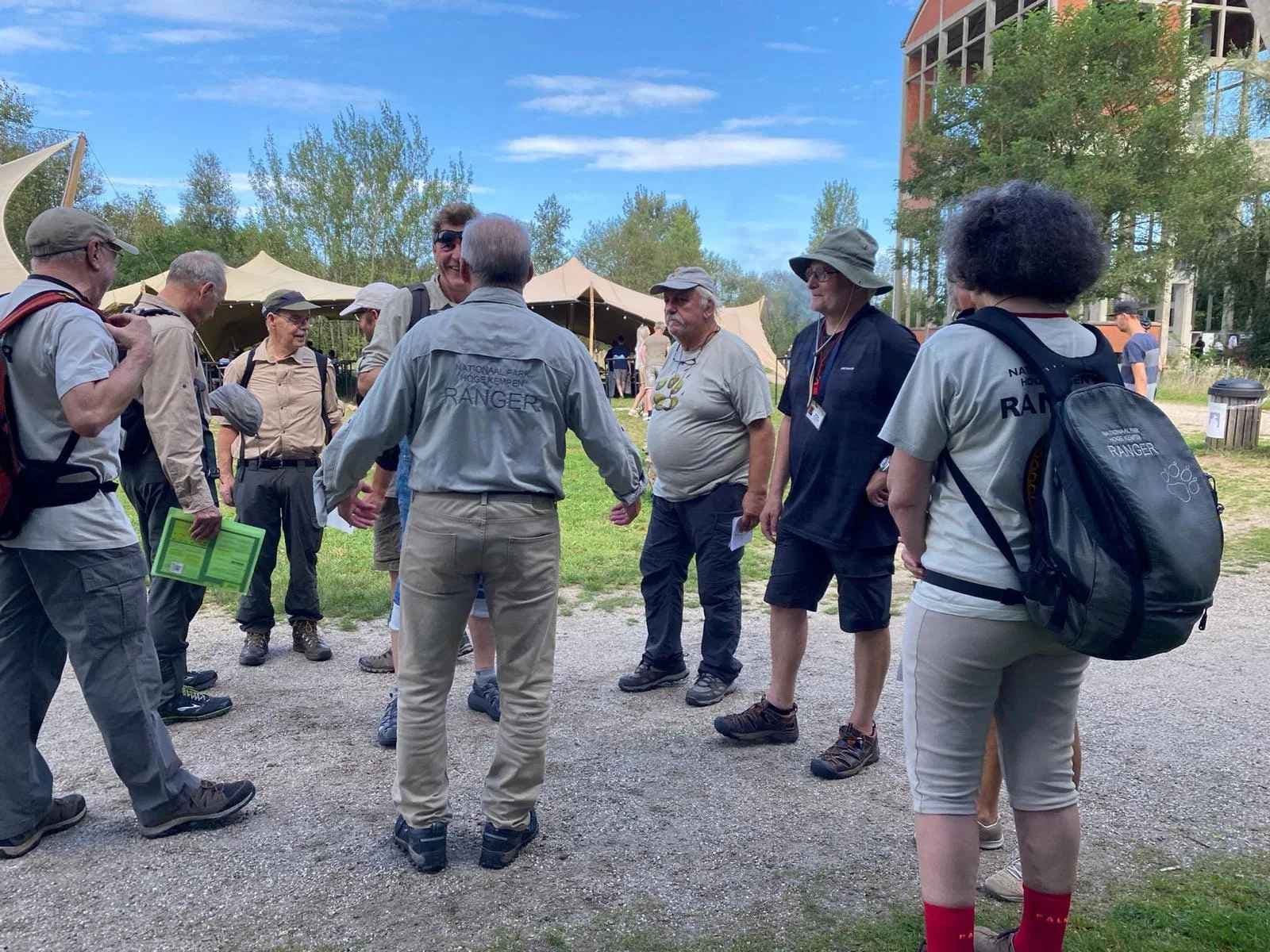
At Give it Forward, we organize family days that combine team connection with genuine environmental impact, primarily at Nationaal Park Hoge Kempen. That choice of location isn't incidental. A national park gives families a shared backdrop that's more memorable than a rented function hall, and it lets the day's activities, guided nature walks, bike safaris, water activities, survival hikes, culinary experiences, connect directly to something bigger than the company itself.
Ask yourself what story you want to tell six months from now. "We rented a field and had burgers" doesn't survive retelling. "We spent the day in a national park, kids learned to track animals, and the company supported local conservation work" does.
Choose one accessible location and keep logistics simple
Concentrating your family day on a single, accessible site is the most practical decision you'll make, and it's also the most sustainable one. Fewer separate venues mean fewer transport legs, less coordination overhead, and a calmer day for parents managing kids, strollers, and schedules.
Belgian municipal sustainability guidance consistently points in this direction: organizing an event around one location limits unnecessary travel and simplifies the logistics needed to run it responsibly, according to guidance published by the municipality of Zwevegem (2024). That's not just an environmental checkbox. Parents with young children genuinely benefit from a single site where everything, parking, activities, food, rest areas, is within walking distance.
When we build a family day for a client, we treat site selection as the first real design decision, not an afterthought once the guest list is finalized. A site that's too spread out turns a relaxed Saturday into a logistics exercise, and that stress is exactly what a family day is supposed to remove for your team.
Make the day genuinely kid-friendly and parent-friendly
A family day only works if parents can actually relax, which means the program has to entertain kids without requiring constant parental supervision. Build in activities scaled to different ages, quiet zones for younger children, and a schedule loose enough that nobody feels rushed between stations.
This is where varied, hands-on activities outperform a single big spectacle. Guided nature walks work for grandparents and toddlers alike. Bike safaris and water activities give older kids and teenagers something active. Culinary experiences give everyone a shared moment to sit down together. The goal isn't to entertain every age group with the same activity, it's to give every age group something they'll enjoy, at the same location, on the same day.
Parents remember whether they got to actually talk to their colleagues, or whether they spent the whole day chasing a six-year-old. Design for the former.
Connect the program to a local project or nature goal
The single decision that turns a nice day out into a day with lasting impact is tying the program to something concrete, a nature restoration effort, a local conservation goal, a tangible number your team helped move. Without that, you have a party. With it, you have a story.
Belgian sustainable event guidance from organizations like Leefmilieu Brussels and the Event Confederation consistently frames this as core to responsible event design, not an optional add-on. The 2024 Event Confederation sustainability guidelines for events emphasize designing programs around measurable, local outcomes rather than symbolic gestures.
In our engagements with companies planning family days in Hoge Kempen, we've found that the activities families remember most aren't the flashiest ones, they're the ones where they visibly contributed to something, whether that's a guided walk that explains an active restoration project or a hands-on element woven into the day. That's also the material your sustainability and marketing teams can actually use afterward: photos of families in a national park, tied to a real conservation narrative, land very differently than photos of a company logo on a bouncy castle.
If your CSR targets already include nature or biodiversity goals, this is the easiest possible way to make them tangible to employees and their families at once. For companies looking to go further on the social impact side specifically, impact events built around hands-on volunteering with social organizations offer a complementary format outside the family day itself.
Handle catering and materials sustainably
Local, seasonal catering with a strong vegetarian option is the standard that Belgian sustainable event guidance points to, and it also happens to serve a mixed crowd of adults and children better than generic catering does. Reduce single-use materials, sort waste properly on site, and favor reusable serving materials wherever the venue allows it.
Guidance from Leefmilieu Brussels and municipal sustainability resources for events (Wevelgem, 2024) both recommend minimizing waste, favoring selective collection, and choosing reusable materials as baseline practice for any outdoor event. For an outdoor site specifically, protecting the ground itself matters too: avoid damaging the terrain, respect the natural surroundings, and leave the site properly cleaned up afterward.
None of this is complicated, but it does require deciding on it before the day, not scrambling for bins once 150 people show up with kids in tow.
Close the day with something you can point to
The difference between a fun day and a day with lasting impact is whether you can name, specifically, what changed because of it. A number of trees planted, hectares of nature restored, a local organization supported, a concrete contribution your team can see reflected in next year's report.
Our approach with clients handles this by building the "what did we achieve" answer into the day itself, not adding it as an afterthought in a follow-up email. If your team spent the afternoon on a guided walk through an active restoration site, that's the anchor for your internal comms and your ESG storytelling both. For guidance on how to actually quantify that afterward, our article on how to measure the impact of team events walks through what's realistic to track and report.
When this doesn't work
Three things reliably sink a family day's chances of creating lasting impact. First, treating the "impact" element as a fifteen-minute add-on bolted onto an otherwise generic party, employees notice the difference between a genuine activity and a token gesture. Second, over-programming the day so tightly that families never get unstructured time together, which defeats the actual purpose of a family day. Third, failing to decide on the story you want to tell before the event happens, which means marketing scrambles for content afterward instead of capturing it as it unfolds.
If you're working with a limited budget, that's not a reason to cut the impact element, it's a reason to simplify the format instead. Our guide on affordable family days for SMEs covers exactly how to keep the core experience intact while trimming cost elsewhere.
A family day creates lasting impact when the experience, the location, and the story are designed together, not when you add a nature theme to a standard party afterward. Once you internalize that, you'll stop shopping for venues and start shopping for experiences, which changes every subsequent decision you make about the day. If you want to see what that looks like in practice, get in touch with our team to talk through a family day built around Nationaal Park Hoge Kempen.
Frequently asked questions
How do I organize a company family day?
Start by choosing the experience and location before anything else, ideally a single accessible site that limits travel and simplifies logistics. Build a program with age-appropriate activities, add sustainable catering with a strong vegetarian option, and connect the day to a concrete local or environmental outcome. Close with something measurable you can report on internally and externally.
What is the purpose of a company family day?
A company family day strengthens team cohesion by letting colleagues connect outside the office, in a relaxed setting alongside their families. Done well, it also supports employer branding, since employees who feel their company invests genuinely in their family life tend to feel more loyal. When tied to a nature or social project, it additionally supports concrete CSR and sustainability goals.
What are some unique family day ideas?
Guided nature walks, bike safaris, water activities, survival hikes, and shared culinary experiences all work well because they scale across age groups and don't require constant parental supervision. The most memorable versions connect these activities to a real local project, like an active conservation or restoration effort, rather than staging them purely as entertainment.
How much does a company family day typically cost?
Cost depends mainly on group size, location, activity complexity, and catering choices, so there's no single number that applies across companies. What drives cost up is highly customized multi-activity programming and premium venues; what drives it down is choosing one well-equipped location and simpler, shared activities. Smaller companies can still run a meaningful day by trimming scale, not by cutting the impact element.
How is a family day different from a standard team building event?
A family day includes employees' partners and children, so the goals shift toward inclusivity, relaxed pacing, and activities that work across ages rather than pure team performance or collaboration exercises. Standard team building, including impact-driven formats, focuses on the employee group itself working together, often on a hands-on project with a social organization.
Sources
- Gemeente Zwevegem, 2024 — municipal guidance on single-location events reducing transport and logistics needs
- Event Confederation, 2024 — sustainability guidelines for events, including waste reduction and local impact design
- Gemeente Wevelgem, 2024 — practical tips on waste sorting and reusable materials for events
Share this post
Forest Forward Team
Stay up to date with our latest insights
Related articles
Corporate family day: how to organise one that actually connects
A corporate family day done right is not a perk. It is a strategic investment in team cohesion, employer branding, and genuine family involvement, all in one afternoon.

How to evaluate a corporate family day vendor
Choosing the right vendor for your corporate family day is about far more than entertainment. It's about finding a partner who delivers safety, inclusivity, and measurable impact at scale.
Sustainable family day in a national park: practical tips
A national park setting transforms a corporate family day from a forgettable afternoon into something employees genuinely talk about. Here is how to plan one that holds up on sustainability, inclusivity, and real engagement.