
Corporate team building: the complete guide for 2026

Forest Forward Team
23-07-2026
•If you've typed "corporate team building" into Google this year, you've hit a wall of escape rooms, cooking classes, and generic trust-fall exercises. Most of that content answers a narrower question than the one you're actually asking. You're not just looking for an activity. You're looking for a format that strengthens your team, tells a story your clients and candidates will remember, and moves the needle on the ESG commitments your board signed off on.
We see this constantly in our work with HR, Sustainability, and Marketing teams across Belgium: the moment a company's leadership asks "what did we actually get out of that team day?", generic formats run out of answers. A sustainable walk in the Ardennes or an escape room in Antwerp might produce laughter, but it produces nothing you can put in your ESG report or your LinkedIn recap.
How we judge what makes a team building format worth your budget
Before comparing formats, here's the criteria we use when advising companies on which direction to take:
- Does it build real collaboration, not just proximity? Sitting in the same room isn't teamwork.
- Does it leave a visible, local trace after the day ends, something a client, employee, or journalist could point to?
- Can the outcome be measured in numbers your CSR report can actually use (trees planted, meals distributed, hours volunteered)?
- Does it scale across departments, company sizes, and repeat annually without losing meaning?
- Is it logistically painless for the person organizing it, since most HR and CSR managers are already stretched thin?
What is corporate team building, really?
Corporate team building is the deliberate use of shared activities to strengthen collaboration, engagement, and organizational culture. It is not a reward, a party, or a box-ticking exercise; it's a tool that, done right, changes how people work together back at the office.
The mistake most companies make is treating it as a one-off "fun day" disconnected from strategy. A genuinely effective program ties into three layers at once: team connection, a real contribution to society or nature, and a minimal footprint from the event itself. That third layer is where most traditional formats fail entirely, since bussing forty people to an indoor venue and back rarely earns anyone's sustainability scorecard.
Why team building matters more for Belgian companies right now
Belgian companies are under growing pressure to prove their ESG commitments aren't just slide-deck language, and team building is one of the few budget lines that can serve both culture and compliance goals at once. HR wants retention and cohesion. Sustainability wants tangible, reportable action. Marketing wants a story worth telling. When these three stakeholders pull in different directions, the resulting activity satisfies nobody. When the format is chosen right, it satisfies all three simultaneously.
In our engagements across manufacturing, logistics, financial services, and healthcare, the recurring pattern is clear: companies that treat team building as a strategic, recurring investment (not a once-a-year gesture) see stronger internal buy-in from employees and a cleaner story to tell externally. The activity becomes proof, not decoration.
The main types of corporate team building activities
Corporate team building activities fall into a handful of broad categories, each suited to different goals, group sizes, and budgets.
- Indoor problem-solving activities: escape rooms, quizzes, cooking challenges. Fast to organize, low physical demand, but disconnected from any lasting outcome.
- Physical and outdoor challenges: obstacle courses, sports tournaments, survival hikes. Good for energy and bonding, weak on measurable impact unless paired with a purpose.
- Creative and innovation workshops: design sprints, hackathons, storytelling sessions. Strong for cross-functional teams, less suited to large, mixed-seniority groups.
- Volunteering and impact events: hands-on projects with social or environmental organizations, from food redistribution to nature restoration. Highest on measurable, reportable outcomes.
- Sustainability talks and nature walks: guided sessions combining expert storytelling with movement outdoors, designed to activate employees around ESG strategy rather than just inform them.
- Family days: extending the experience to employees' families, building loyalty and goodwill beyond the office.
For companies with a genuine sustainability ambition, the fourth category, impact events, consistently produces the strongest combination of team bonding and communicable results. It's the format we've built our own practice around, because it's the only one that turns a single day into evidence rather than anecdote.
Why more Belgian companies are choosing impact-driven team building
Impact-driven team building wins because it's the only format that produces a result you can point to after the confetti settles: a restored trail, redistributed food, a care farm that ran smoother for a day. Traditional formats produce memories. Impact formats produce memories plus outcomes.
Our Impact Events connect corporate teams directly with social organizations across Belgium, working hands-on on concrete projects, from food distribution and waste management to nature centers and care farms, under professional guidance. Every partner organization is chosen for a sustainable, fair collaboration, so the impact isn't a one-off donation dressed up as an activity. It's real labor that those organizations genuinely need, delivered by teams who leave the day with sore muscles and a story worth telling.
This is precisely why the format resonates with the three internal stakeholders who usually drive the decision. HR gets a team day people actually talk about months later. Sustainability gets a number for the report. Marketing gets photos and a narrative that doesn't feel manufactured.
How to choose the right format for your team
The right format depends on your team's size, your ESG targets, and how visible you want the outcome to be, not on what looks impressive in a vendor's brochure. A 20-person team with a tight CSR mandate needs a different format than a 300-person logistics company running an annual company-wide event.
Ask these questions before booking anything:
- What's the primary goal: cohesion, employer branding, or ESG reporting? (Usually it's all three, in which case impact events win by default.)
- How many people, and across how many locations?
- Do we want a single flagship event, or a recurring program throughout the year?
- Can we measure and communicate the result afterward, internally and externally?
- Who handles logistics, permits, transport, and safety, us or the partner?
If your team building budget currently funds an escape room every autumn, read how outdoor team building activities compare on real, measurable outcomes rather than novelty alone.
How to make team building measurable for ESG reporting
Team building becomes ESG-relevant the moment you define outcomes before the event, not after. Set concrete targets (hours volunteered, kilos of waste cleared, meals packed, trees planted) before the day starts, track them during the activity, and turn them into a short impact summary afterward that both internal leadership and external stakeholders can use.
We've built this measurement step directly into how we run impact events: every project is scoped with a partner organization in advance, so the output is known and countable, not vague. That's the difference between "we did something good" and "we contributed X hours to a verified local project," and only the second sentence belongs in a sustainability report. For a deeper look at tracking outcomes across multiple events, see our guide on how to measure the impact of team events.
Common mistakes companies make with team building
Most team building budgets get wasted on formats chosen for convenience rather than outcome. The three mistakes we see most often:
- Treating it as a single annual event instead of an ongoing program that compounds cohesion and reputation over time.
- Picking a venue before defining the goal, which locks you into a format that can't deliver what leadership actually wants.
- Skipping measurement entirely, so a genuinely good day of volunteering never makes it into the CSR report because nobody tracked the numbers.
Fixing all three usually just requires picking a partner who scopes the goal, the format, and the reporting together from day one, rather than treating them as three separate conversations.
Which format for which situation
- Small team (under 30), tight timeline: a single-day impact event with a nearby partner organization.
- Company-wide culture push: a recurring program combining impact events with sustainability talks and walks to keep ESG top of mind between events.
- Employer branding and retention focus: pair an impact event with a family day to extend goodwill beyond the employee.
- Board-level ESG reporting need: an impact event with pre-agreed metrics and a post-event impact summary, repeated annually for trend data.
The takeaway across all four: impact-based formats are the only ones that serve HR, Sustainability, and Marketing at the same time, without compromise.
Frequently asked questions
What are the 5 C's of team building?
The 5 C's commonly cited are communication, collaboration, commitment, cohesion, and celebration. They describe the stages a team moves through: talking openly, working together on shared tasks, staying committed to outcomes, building trust and unity, and recognizing results together. Impact-driven formats naturally hit all five because the "task" is a real project with a visible finish line, not an abstract exercise.
What is a 15-minute team building activity?
A 15-minute team building activity is a short, low-commitment exercise used to open meetings or breaks, like quick icebreakers or rapid problem-solving rounds. These work for daily team rhythm but don't replace a full-day activity when the goal is deeper cohesion, ESG reporting, or employer branding. They're a supplement, not a substitute.
What is the marshmallow game for teams?
The marshmallow challenge is a classic exercise where small teams build the tallest freestanding structure using spaghetti, tape, and a marshmallow on top, within a time limit. It tests rapid prototyping, communication, and handling failure under pressure. It's a useful icebreaker, but produces no lasting outcome beyond the exercise itself.
What are the 7 C's of team building?
The 7 C's extend the 5 C's model to include capability (having the right skills on the team) and change (adapting together to new circumstances). Together they form a fuller picture of what makes teams durable: communicating well, capable of the task, committed, collaborative, cohesive, comfortable with change, and celebrating outcomes.
How do we choose between indoor and outdoor team building?
Choose based on your goal, not the weather. Indoor formats suit quick, low-cost sessions with minimal logistics. Outdoor and impact-based formats suit companies wanting measurable ESG outcomes, stronger storytelling material, and deeper team bonding, since physical, purposeful activity outdoors consistently creates stronger shared memories than a meeting room exercise.
Can team building really support our sustainability goals?
Yes, when the format is chosen specifically for it. A volunteering-based impact event produces countable output (hours, materials, meals, restored land) that can go directly into a CSR report, unlike a generic activity that leaves no measurable trace. The key is defining the metric before the event, not trying to retrofit one afterward.
Team building stops being a "nice to have" the moment it produces a number your ESG report can use and a story your team actually wants to tell. Once you know that, every future team day gets evaluated on outcome, not novelty. Ready to put this into practice? Get in touch with Give it Forward to scope a tailor-made impact event for your team, built around your sector, your values, and your ESG targets.
Share this post
Forest Forward Team
Stay up to date with our latest insights
Related articles

Volunteer team building: can your company outing be a volunteer action?
Yes. Not as a side activity bolted onto a normal team day, but as the team day itself, with the volunteer work as the main event.

Team building tree planting days: how to make it a real team event, not just a donation
You can run a company tree planting day that is both a genuine team building experience and a real environmental project, but only if you design the day around your people, not just around the trees.
Nature-based team building: why it actually works
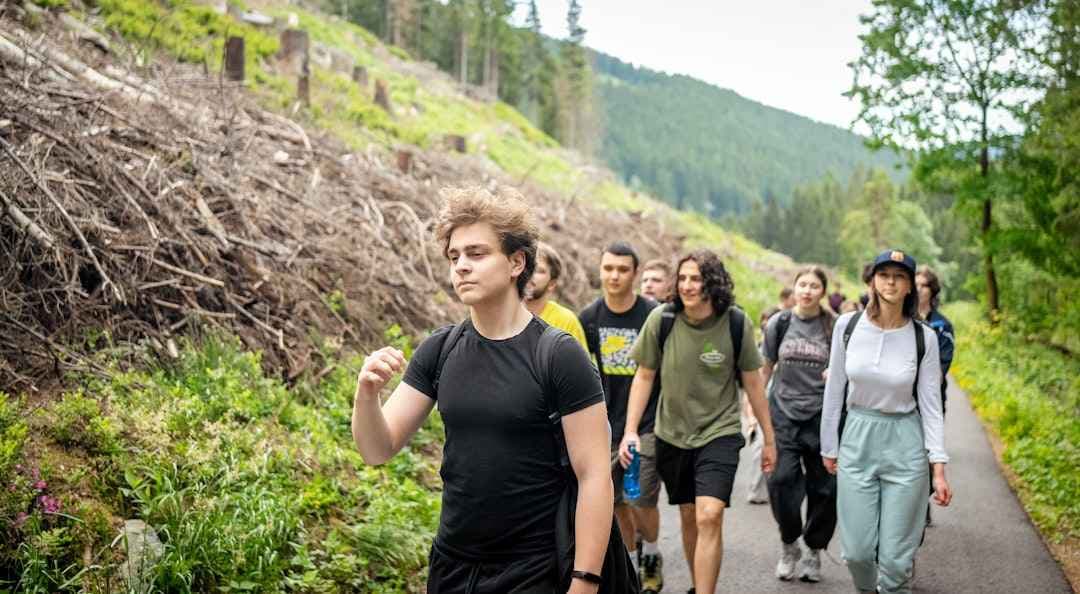
Nature-based team building works because it replaces artificial games with real stakes: a physical outcome, a changed landscape, a team that did something rather than played at something.