Outdoor team building: the sustainable alternative

Forest Forward Team
28-07-2026
•Why the classic teamday doesn't stick
Most outdoor team building is built to entertain, not to leave a trace. Zip-lining, obstacle courses, cocktail workshops, they all produce good photos and a Monday-morning "that was nice," but nothing that survives past the coffee machine chat. There's no object, no place, no outcome your team can point to and say "we built that."
We see this constantly in our work with HR and sustainability teams across manufacturing, logistics, financial services and healthcare in Belgium: the appetite for the loud, generic teambuilding day is fading. What replaces it is a demand for experiences that double as proof, proof of engagement, proof of environmental commitment, proof that the company means what it puts in its sustainability report. A rope course doesn't give you that. A forest does.
This isn't a niche preference. The market itself is already shifting toward outdoor and nature-based formats, because natural settings simply work better for group dynamics than a rented event hall. The gap that remains is impact. Most outdoor providers still sell an afternoon out. Almost none can tell you, six months later, how many square meters of biodiverse forest your team helped establish, or how that translates into your ESG reporting.
What HR, sustainability and marketing teams are actually asking for now
Companies today aren't choosing between team cohesion, environmental impact and brand storytelling, they want all three from a single afternoon. A well-designed nature team day delivers exactly that combination, and it's why we built our offering around it rather than around generic outdoor games.
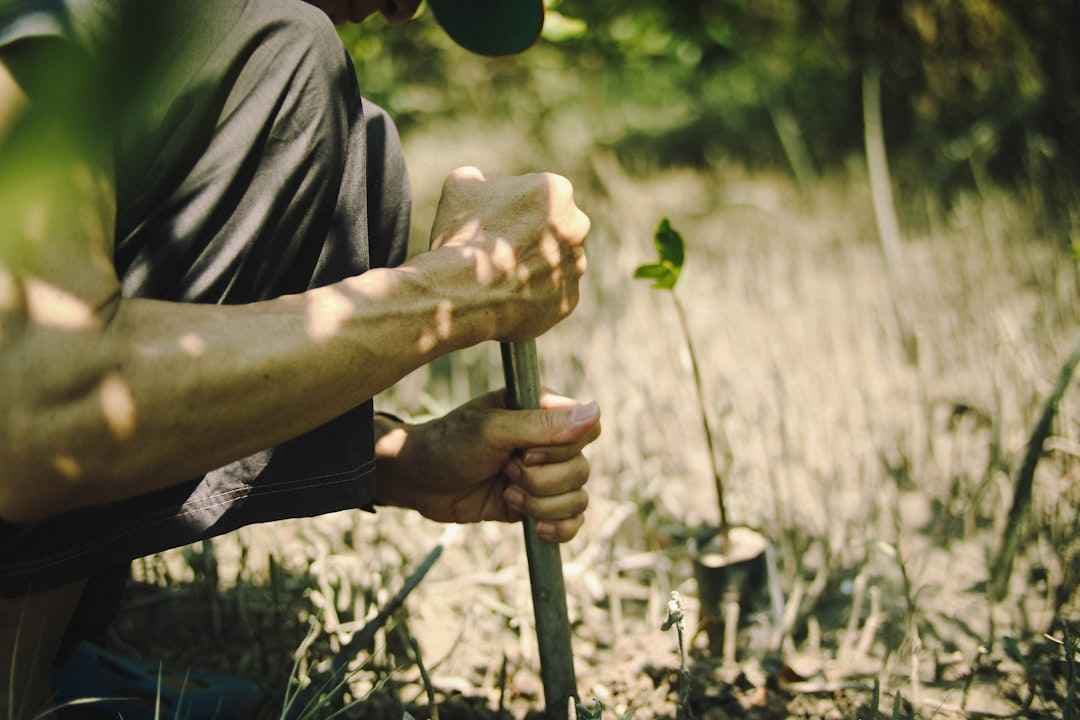
For the HR or People & Culture Manager, the value is in what physical, purposeful teamwork does to a group that a trust fall never will. Planting, digging, and clearing invasive species together forces real collaboration: dividing tasks, adapting to terrain, finishing something visible before the bus leaves. That's a different kind of bonding than a scavenger hunt produces, and it's more memorable precisely because it's real work with a real result.
For the Sustainability or CSR Manager, a forest-based team day is not a symbolic gesture, it's a line item you can report. Trees planted, square meters restored, species reintroduced: these are numbers that plug directly into your sustainability narrative, your annual report, or your internal ESG dashboard. It reads entirely differently to a client or auditor than "we did an escape room as a team-bonding exercise."
For the Marketing or Communications Manager, this is also simply better content. A forest planting day, done well, produces visuals and stories that a beer tasting never will: employees with their hands in soil, a landscape transforming over three growing seasons, a story with a beginning and a visible middle. It's the kind of content that holds up when a client or supplier asks "so what does your sustainability commitment actually look like in practice?"
Collective Forest: plant a real forest with your team, not just a fun day
If your team wants a single, well-defined action that combines team building with lasting environmental impact, Collective Forest, our collective corporate forest program, is built for exactly that. Companies purchase trees, a minimum of five, that get planted annually as part of a growing collective forest, and every participant receives a certificate confirming the contribution.
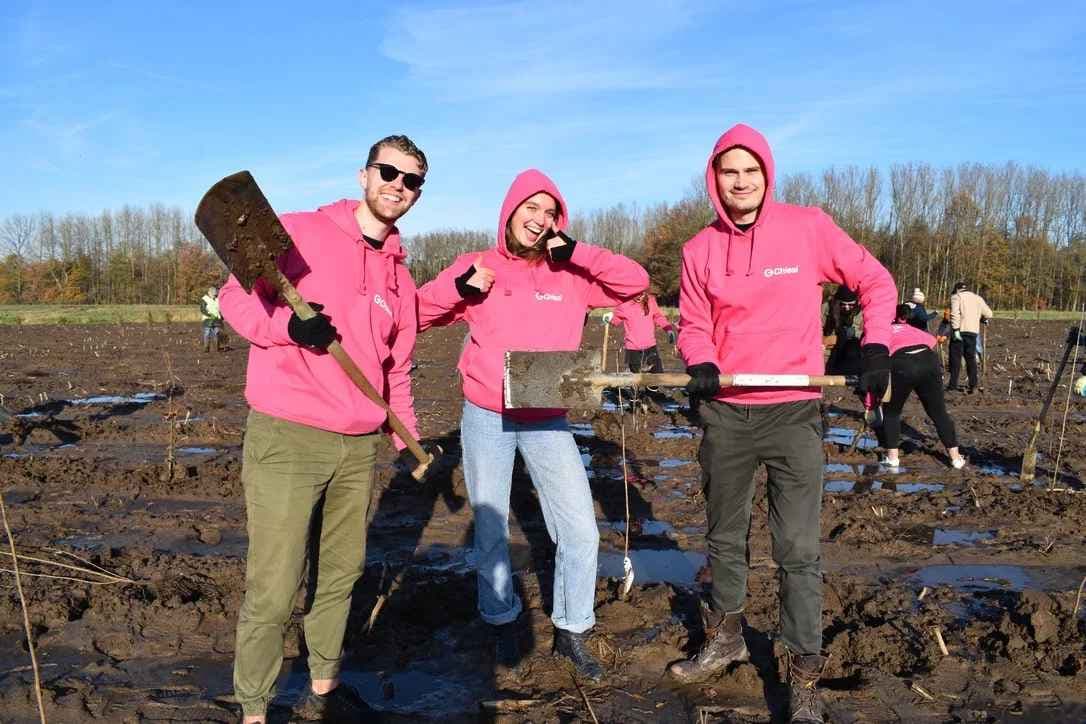
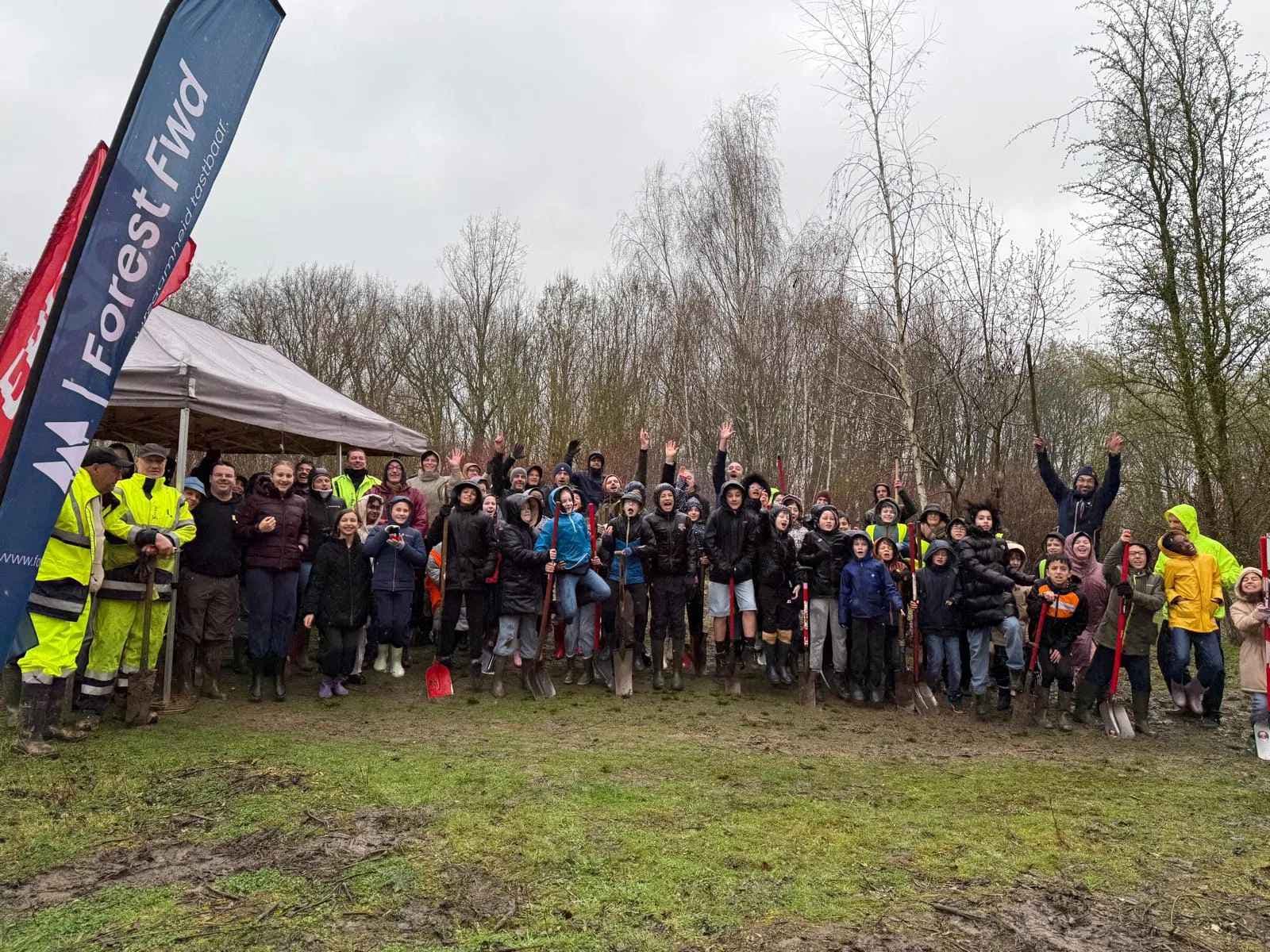
Where it becomes a genuine team day rather than a transaction is at 100 trees and up: that threshold includes an invitation for your employees to join the actual planting event. Your team isn't buying an offset on a spreadsheet, they're standing in a forest they helped establish, next to colleagues from other companies doing the same thing. Recent plantings under this program have taken place at The Loop in Ghent, alongside partners including IKEA and Yuki, which gives you a sense of the scale and company this puts you in.
It also works well as a corporate gifting mechanism, trees purchased in someone's name make a genuinely different kind of client or employee gift than the usual hamper. For a marketing team looking for a single high-impact, well-documented sustainability action to point to in a year-end report, this is often the cleanest entry point we offer.
When a forest team day beats a classic outdoor teambuilding event
Choose the forest format when your goal is more than "give the team a nice afternoon off." If you need something reportable, photographable, and repeatable year over year, nature-based team building wins on every axis that matters to HR, CSR and marketing simultaneously. If your only goal is a fun one-off with no follow-through required, a generic outdoor agency will do the job more cheaply and with less planning.
The honest dividing line is intent. A company that wants a single feel-good afternoon with no reporting obligation doesn't need a forest project, a go-kart day or an escape room will satisfy that brief perfectly well, and there's nothing wrong with that when it's genuinely all you're after. But if your company has ESG targets on paper, wants employer branding material with substance behind it, or simply wants a team day that people still talk about after the photos stop circulating, generic outdoor formats fall short by design. They're not built to produce a measurable outcome, because measurable outcomes were never the brief.
We've run this comparison directly with clients weighing both options: the companies that choose the forest route consistently cite the same reason, they wanted the day to mean something beyond the day itself. That's the gap the classic outdoor teambuilding industry hasn't closed, and it's the one we built our entire model around closing.
Building it into a bigger sustainability story, not a one-off
A single planting day works best when it's part of something ongoing, not an isolated event you repeat once a year out of habit. Our approach across corporate forest projects, office forest transformations, and habitat restoration work is to treat the team day as one visible touchpoint in a longer relationship with a place, not a standalone activity.
That's also what separates a nature-based team day from a generic outdoor agency booking: continuity. A rope course provider has no reason to see your team again next year. A forest, on the other hand, grows. Teams that return to the same site a year later see the difference their planting made, which turns a single afternoon into an ongoing narrative you can build internal engagement and external communication around. We go deeper into how to structure that continuity in our piece on sustainable team building that actually creates impact.
Companies with their own outdoor premises sometimes go a step further and bring the forest to the office itself, converting underused courtyards or lawns into a dense, biodiverse micro-forest using the Miyawaki method. We cover what that looks like in practice in transforming an outdoor office into a thriving green workspace, which pairs well with an annual team planting day as a permanent, on-site complement.
The sustainable alternative to classic outdoor team building isn't a new game or a nicer venue. It's replacing a day that entertains with a day that builds something that keeps growing after your team goes home. Ready to give your team a planting day with real, reportable impact? Get in touch to plan your Collective Forest team day.
Frequently asked questions
What are good outdoor team building activities that also have real impact?
Activities where the team produces a lasting, physical outcome work best: tree planting, habitat restoration, or clearing invasive species from a natural site. Unlike games or obstacle courses, these leave something behind your team can revisit and your company can report on. Forest Forward structures these as full-day nature projects combining hands-on teamwork with measurable environmental results.
How is a nature-based team day different from a classic corporate teambuilding event?
A classic event is built around entertainment and ends when the day ends. A nature-based team day produces a physical, lasting result, a planted forest area or restored habitat, that keeps developing long after the event, giving HR, sustainability and marketing teams something concrete to report and communicate.
Can a forest team day count toward our company's sustainability reporting?
Yes, when it produces measurable outcomes like trees planted or square meters of habitat restored, it can be documented in your CSR reporting or ESG dashboard. This is precisely why companies increasingly prefer nature-based team days over generic outdoor events, they generate reportable data, not just a pleasant memory.
How many employees can join a forest planting team day?
Group sizes vary by project and site, but our Collective Forest programme includes an employee planting invitation once a company purchases 100 trees or more, making it well suited to teams ranging from a single department to a full company outing.
Is outdoor team building in nature suitable for teams with no outdoor experience?
Yes. These days are designed as guided group activities, not physical challenges requiring prior experience. The focus is on collaboration, task division and shared purpose, which makes them accessible regardless of fitness level or outdoor familiarity.
Share this post
Forest Forward Team
Stay up to date with our latest insights
Related articles
Sustainable team building that actually creates impact
Most "green team days" produce a nice photo and a forgotten memory. Here is how to build something your team is proud of for years.
Sustainable team events boost employer branding. Here's why.
A team day where employees plant a forest that stays in the ground does more for your employer brand than any escape room ever will. It gives current and future talent proof, not promises.
Teambuilding in nature: how to plant a day that stays visible
The best team day isn't one people remember fondly for a week. It's one they can still point to two months later and say: "We built that."